STS: greatest hits

December 23, 2050

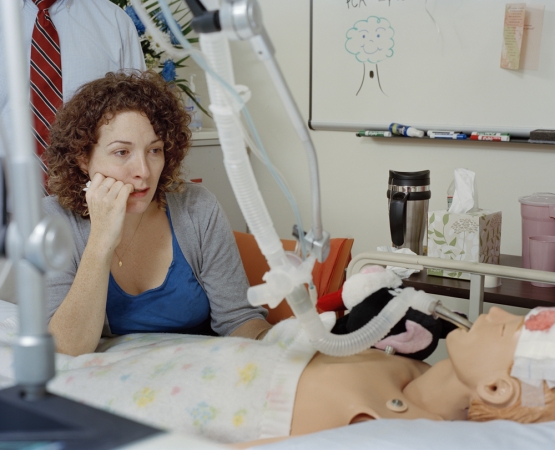
SPs singing a hit song about debriefing techniques.
[The Mark IV via wikimedia]

I'm still working as an SP at a variety of programs, trying to find better ways to articulate the wonderful and awkward and invisible ways we teach communication skills to a variety of learners.

I don't have nearly as much time to write as I'd like. But reviewing some of what I wrote 5 (!!) years ago, most of it still is relevant. One of my major goals was to resolve the ambiguity and friction I felt when clarity was lacking, especially when rating "soft skills." It was highly useful to create standards for myself so I could make conscious choices when a program didn't have its own. Much of my current feedback/debrief is based on the work I did here to truly understand and articulate vague communication items and the systems in which I work. So here are some of my greatest hits, the ones that still have great influence on me and that describe the kind of details I am looking for in encounters:

Communication:

Feedback:

Exams: 

Work environments:

Profession:

SP web series!

March 15, 2016


Standardized: a web series by SPs, for SPs. Watch the pilot below:


Elderly simulations

January 19, 2016


An elderly patient patiently waits for her appointment.
[Portrait of an Old Woman via wikimedia]

Some people still say you can't practice empathy, that people either have this as a skill or they don't.  I disagree, which is why I like these elderly simulations in Poland:
Medical student Ludwika Wodyk fumbles her way slowly down the stairs, her movements encumbered by heavy strapping around her limbs and body, her vision distorted by special goggles. She is one of a group of medical students in Poland being given the chance to experience first-hand how it can feel to be an aging patient.
Empathy is something that can be taught, or at the very least, experienced. For many people, empathy is highly contextual, so direct experience with a problem can often give them insight into the barriers or complications of a particular population. This brings benefits like understanding, tolerance, and more creative problem-solving when the same circumstances arise again.

Elderly simulations can also be found in Britain and at MIT.

Extra credit:
When I roleplay older patients, I usually focus on the visual aspects. In future scenarios I want to pay more attention to the physical aspects and give feedback from the perspective of a person who might also have mobility, sight and hearing challenges as well.

Quote of the Day

January 12, 2016


[William Osler photograph via wikipedia]

"It is much more important to know what sort of a patient has a disease than what sort of a disease a patient has."
William Osler


Osler was one of the four founding professors of Johns Hopkins Hospital. He established the practice of residency. Before Osler, med students could go on to be doctors without having seen a single patient!

Bedside Manner

January 5, 2016

Yes, I want to see more cross-pollination and artistic collaborations like Bedside Manner!

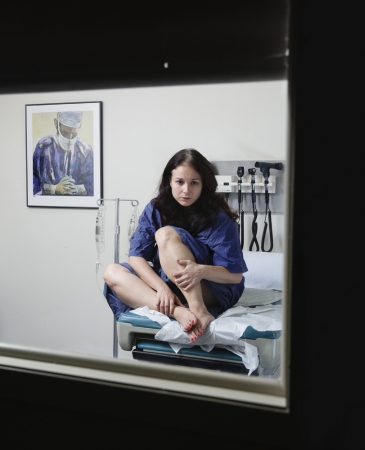
From the artist's website: "Bedside Manner is a series of photographs and an 18-minute video that explores the little-known world of standardized patient simulations. Standardized patients (SPs) are professional medical actors who are trained to present particular sets of symptoms in order to help medical students improve their diagnostic skills and bedside manner. Routinely, SP encounters are filmed and evaluated by medical professors who observe the interaction of student and medical actor through a one-way mirror."


I am delighted Corinne May Botz got permission for this series. Botz is also the author/photographer of "The Nutshell Studies of Unexplained Death," which explored the groundbreaking crime scene dioramas of Frances Gleaner Lee in the 40s and 50s.

I really wish I could watch the video, which doesn't appear to be available on her site or linked from the New Yorker. According to Botz, the video "deconstructs a real-life standardized patient simulation. It also creates a complex portrait of the neurologist Dr. Alice Flaherty, who plays herself as a doctor, standardized patient and real patient." Intriguing!

I think I am most interested in exploring this further: "...acting and staged representations inform the interaction between patients and doctors in important ways. In order to express their suffering, real patients must learn how to act in doctors' offices." This is very insightful. Reminding learners that patients are "acting," too, may be of use to them. The more learners are able to demonstrate empathy, validation, confidence, respect and autonomy, the less likely patients are to feel the need to "perform" to demonstrate their distress.

In fact, I am strongly reminded of a blog post called "Performance Anxiety" about how an obese patient feels the need to be "terrifically cheerful" in order to receive adequate care. "...being cheerful and upbeat simply works to get a better quality of care in almost every instance. But it’s also enormously taxing, because it is, after all, a performance. Going in for my ultrasound appointment, I was nervous as hell, but I also knew that as soon as I met with the wand-wielder I’d have to push all that worry away and take on a lighthearted, friendly, cheerful persona if I wanted to be certain I’d be treated like a whole person... this pressure to perform under what are at best extremely uncomfortable circumstances does add an additional layer of stress... I resent having to put this happy-fat-lady caricature on. But it’s the most reliable method I know for securing good customer service when I’m meeting a specialist or any new-to-me medical professional for the first time."

Using collaboration with patients

December 29, 2015


An SP and a learner collaborate together.
[The Duet via wikimedia]

Collaboration is a tool learners can use to reduce the power differential and invite the patient into the conversation.

Collaboration engages the patient with questions that explicitly offer the patient input into treatment, insight into the illness, or the ability to set the agenda or control their own experiences. Learners can always collaborate with the patient even in simple encounters:

  • What else did you want to talk about at today's visit?
  • What/why do you think this is happening?
  • What do you think about [X]?
  • What questions do you have so far (not just as a wrap-up question)
  • Is there anything else I should know about your condition?
  • We can stop the physical exam at any time.
  • How does that plan sound?

Collaboration is especially vital in lifestyle modification discussions, and open-ended questions are the most effective.

  • How could you improve your diet?
  • How could you add more vegetables to your diet?
  • How could you get more exercise in your day?
  • What activities are most interesting to you?

However, a collaborative statement is not a supportive statement. So if the learner says "We'll do this together" or that "I'll be here every step of the way," that's nice and an effective use of reassurance/support, but it's not collaboration. And as I've written before, "Is that OK?" is not a collaborative (or good) question.

Here's an example of how to classify statements that could occur in a smoking cessation case, for example:

  • Statement: I tell my patient to start slow, just one cigarette a day.
  • Statement: That's something you could do.
  • Closed collaboration: Will that work for you?
  • Open collaboration: How does that sound?
  • Open collaboration: What questions do you have about those recommendations?
  • Open concrete collaboration: How many cigarettes do you think you would like to try cutting back on per day?
  • Supportive: We'll do this together. We have lots of resources to keep you on track.

Homework:
Keep an ear out for collaborative statements in your next encounter. What could the learner do to invite you into the conversation?

Wit

December 22, 2015


Happy holidays! Enjoy Emma Thompson in "Wit" while you're on break. "Wit" won the 1999 Pulitzer Prize for drama. It's funny and awkward and moving. Also: poetry! As someone who has done countless consent and DNR scenarios, this is a tough (but interesting! and powerful!) screenplay to watch; I can't imagine what it must be like if you have had cancer or lost someone to cancer.


Bonus gift: "UVM Medical Center hosts production of "Wit". SPs performing in a lecture hall! I wish I worked at an institution where this was possible.
"Wit," which won the 1999 Pulitzer Prize for drama, comes to Burlington thanks to another woman named Vivian — Vivian Jordan, a Shelburne resident who plays the lead role and whose profession merges the performing arts with the medical arts. Jordan works at the hospital as a “standardized patient,” which means she acts out roles for medical students learning how to diagnose illnesses. It brings awareness of end-of-life issues and spark discussion on the complex nature of dying in the Pulitzer Prize-winning play. 

Computer simulations vs SPs

December 15, 2015


Choose your own adventure!
[La Vérendrye via wikimedia]

I don't know whether to be excited about or skeptical of SIMmersion. A little from Column A, a little from Column B, I guess.

I love technology. I love giving students more chances to practice difficult conversations. As an additional tool in the toolbox, this looks stellar. I can totally see learners using this to practice before an SP encounter.

But then I read things in their press release like:
"A computer screen might not be better for teaching the physical examination of a human, but interacting with a well-designed system is better for teaching students how to talk with a patient [than interacting with SPs]."
If they truly feel this way, and if this is the way they are marketing the product, then the whole foundation is suspect.

I actually went through their sample Motivational Interviewing scenario. Engaging with a computer is fun, and including the MI curriculum as a preview before and as a guide during the encounter is very effective.

But the timing and emotional range is all wrong. Learners, especially beginning ones, struggle with a number of things that can adversely affect patient interactions, like word choices and nonverbal cues. This is especially true in the context of a fast-paced encounter. It's much easier to pick the right statement when you have a limited number of options and as much time as you want to think about it.

Also, there is no verbal feedback in SIMmersions. I strongly believe immediate feedback/debrief with an experienced facilitator featuring student self-reflection is an incredibly effective component of learning. Instead, SIMmersions features a woman in the bottom corner of the screen who responds with appropriate body language based on your response, and offers suggestions for the most effective thing to say next.

I see the usefulness of SIMmersion primarily as an early part of skill acquisition. In my ideal curriculum, learners would develop a new skill like this: beginning with a lecture/introduction, then independent reading/videos, then observation, then SIMmersions, then group work, then SP work with timeouts and a facilitator, then a solo SP.

However, this whole things makes me think we're not far off from The Diamond Age's prediction of "ractors," who are essentially crowd-sourced, on-demand scenario actors able to perform anywhere. Wouldn't that be fun?

Delivering a diagnosis

December 8, 2015


A learner explains a diagnosis to an SP.
[Girolamo Mercuriali via wikimedia]

When learners try to give me a diagnosis, I often feel unsatisfied because the explanation is missing one or more key components that will help my understanding.

When I go to the doctor I want to know these things in this order:

  • How has this conclusion been reached? Without a summary of findings or history, I have less ability to relate the diagnosis to my chief complaint. Transparency allows me to trust the diagnosis when it comes.
  • What is it? The diagnosis should include the medical term and the layman term if there is one. For instance, if the diagnosis is "Non-Hodgkins Disease" or a "lymphoma," I may not understand the learner is telling me I have cancer. If it is a serious diagnosis, I ask learners to leave a beat at this point so I have a chance to process it before continuing with the other parts.
  • What does the patient know about it? After the diagnosis has been named and I know how the doctor has reached that conclusion, it is very effective if the student-doctor opens up the conversation with, "What do you know about [X]?" This allows the patient to lead the conversation and it gives the opportunity for the student-doctor to clear up any misunderstandings or praise the patient for their knowledge.
  • How serious is it? Regardless of the diagnosis, there is always a range of outcomes and consequences. I will likely leap to the worst-case scenario unless I know what the range is. My perception may also change based on any previous experiences I've had (directly or indirectly) with the diagnosis. If I'm not going to die immediately, hearing, "X% of people with this diagnosis have Y happen to them" is really helpful. This is especially true if I am hearing the results of a screening test as opposed to a true diagnosis. 
  • How long will this affect me? Knowing whether the diagnosis will affect me for three days or three years shapes my ability to understand the scope and impact of the diagnosis. Sometimes learners tell me they will "treat" my condition for a period of time: when I hear this, as a patient I think they mean they will cure it. So I want learners to be clear whether this is a treatment meant to prolong my life, or whether my condition is something that will resolve after treatment.
  • What's the next step? And equally importantly, what's my next step? Even if my next step is "wait until the test results come back in 2-3 days," I still know what to do.
Plain language, reassurance, validation, empathy, teach back, collaboration, etc. are good tools to use within this framework, too, but they can't be used to replace one of these steps.

For example:
"Based on your coughing & fever, and those sounds I heard in your lungs, I think you probably have pneumonia, which is a lung infection that causes fluid to build up in your lungs. You're young and healthy so I'm not too concerned right now, but I'm glad you came in so we can treat it before it gets worse. Fortunately, it will probably get better in a couple of weeks after we begin treatment. I'm going to recommend a chest X-ray and a test of what you're coughing up so we know for sure it's pneumonia and so we know what kinds of medications to give you. How does that sound?"
Learners are of course welcome to elaborate on these points if the patient indicates they want more information or clarity. Otherwise, each of these steps should be no more than 1-2 sentences each.

When learners cry

December 1, 2015


"When doves cry..."
[L'enfant Ă  la colombe via wikimedia]

Only a handful of students have cried while working with me, but they have all been memorable. But I don't take it personally, because they always happen during high-stress scenarios, like when the event is required to pass or when my character has been terrifying. Sometimes the learner is suffering from something happening in their life which magnifies any bump in our encounter into an insurmountable challenge.

Usually these encounters are unsatisfying, but the learner generally holds it together during the scenario. When feedback begins, though, so do the tears. In those situations, I've learned that feedback about the encounter in those cases is almost entirely wasted. What is more helpful is to explore what triggered the student and what's going on for them. Empathy first works for learners, too! If there's time, I may also give feedback about compartmentalization, stress management and how to manage negative thoughts.

In general, feedback should role model the kind of interaction you want with providers. So if I stay with my traditional feedback agenda in those cases, I am training learners to stick to their agendas despite the emotional and nonverbal cues a patient is exhibiting.

New inspirations

November 24, 2015


Calliope, the muse of epic poetry, approves this post.
[La Muse Calliope via wikimedia]

This post original began as simply a grateful reference to Empathy 101 (how to sound like you give a damn), because I give similar feedback to learners. I nodded deeply in agreement when I read:

  • "Reassurance often fails if the physician does not also communicate an awareness of the patient’s deepest fears or concerns." 
  • "This model of doctor-patient communication begins with empathic listening and responding, requires reflectivity and self-understanding, and is in itself a healing act."
  • The list of "Statements That Facilitate Empathy," which is a particularly useful tool.

But then I realized these quotes and tools are all by the same person, which is how I discovered Dr. Jack Coulehan. Coulehan has written both "Let Me See If I Have This Right… – Words That Help Build Empathy" for the Annals of  Internal Medicine as well as the textbook Metaphor and Medicine: Narrative In Clinical Practice.

Sadly, neither of those references appear to be available via my normal channels, but some of his other books are, and that's how I learned Coulehan is both a doctor and a poet!

For instance, in addition to his own poetry, Coulehan edited Chekhov's Doctors: A Collection of Chekohov's Medical Tales as part of the Literature and Medicine series. Perfect for actors, eh? The Kindle edition has a much more interesting description of it: "In his brief but distinguished life, Anton Chekhov was a doctor, a documentary essayist, an admired dramatist, and a humanitarian. He remains a nineteenth-century Russian literary giant whose prose continues to offer moral insight and to resonate with readers across the world. Chekhov experienced no conflict between art and science or art and medicine. He believed that knowledge of one complemented the other. Chekhov brought medical knowledge and sensitivity to his creative writing—he had an intimate knowledge of the world of medicine and the skills of doctoring, and he utilized this information in his approach to his characters. His sensibility as a medical insider gave special poignancy to his physician characters. The doctors in his engaging tales demonstrate a wide spectrum of behavior, personality, and character. At their best, they demonstrate courage, altruism, and tenderness, qualities that lie at the heart of good medical practice. At their worst, they display insensitivity and incompetency. The stories in Chekhov's Doctors are powerful portraits of doctors in their everyday lives, struggling with their own personal problems as well as trying to serve their patients. The fifth volume in the acclaimed Literature and Medicine Series, Chekhov's Doctors will serve as a rich text for professional health care educators as well as for general readers."

The intersection of art & science is one of my very favorite things. Looking forward to reading more work by Jack Coulehan.

Quote of the Day

November 17, 2015


[Engraved portrait of Oliver Wendell Holmes via wikimedia]

"The physician's task is to cure rarely; 
relieve sometimes; and to comfort always."
Oliver Wendell Holmes


After 150 years, medical school is still working on this. It makes me imagine what a medical school curriculum would look like if this was its guiding principle.

You're going to be OK

November 10, 2015


A student-doctor reassures an SP.
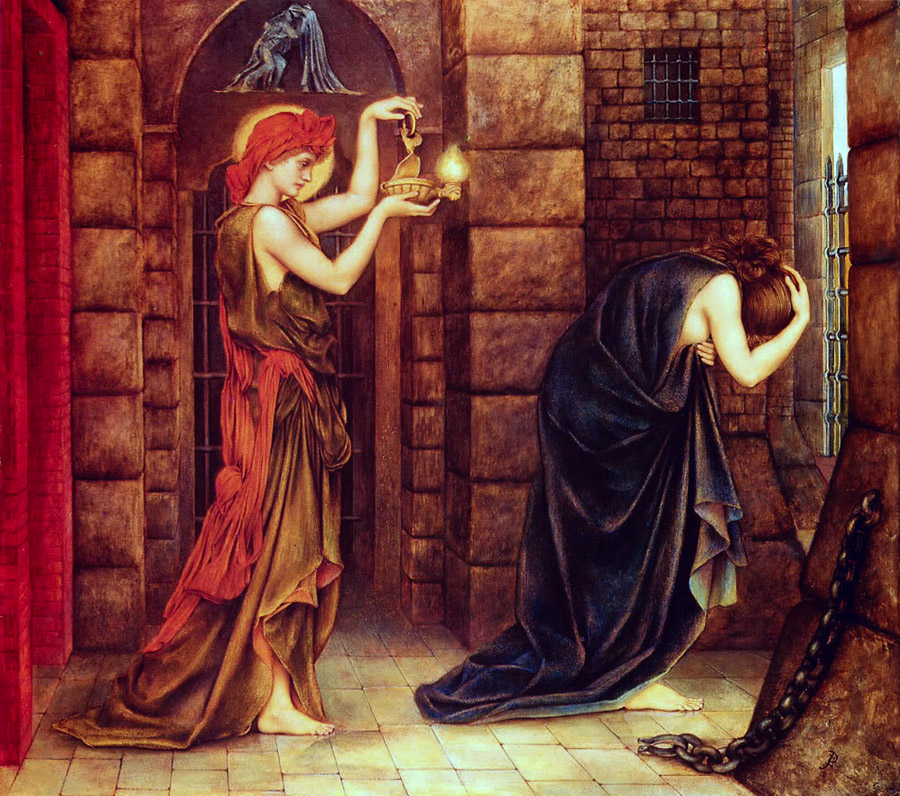
[Hope in a Prison of Despair via wikimedia]

When a learner attempts to reassure me during an encounter by saying, "You're going to be OK," I smile on the inside even though I still look worried on the outside. Because I know the urge to comfort a concerned patient is almost overwhelming, and I can't fault them for the impulse.

But it's impossible to guarantee a patient will be OK. If I believe it and it turns out to be wrong, I am going to feel betrayed by and mistrustful of the person who said it. During feedback with learners, most wished they could take back that statement as soon as they said it. But they didn't know what to say instead. So here's the structure I recommend:

  • Validate the emotion: sincerely acknowledging an emotion almost always de-escalates it. It makes me feel heard and like the student-doctor is attentive to my non-verbal communication.
  • Next steps: of course, defusing the emotion is only the first step. Without further steps, the de-escalation will act as a pause button, but then my anxiety will continue to rise until I know what the student-doctor plans to do about it. The plans don't have to be in great detail, but anything student-doctors are able to do to manage my expectations will cause me to feel more confident in their abilities and less distressed.
  • Reassurance: this is generally what "You're going to be OK" is meant to do, but it's hard for it to seem sincere on its own, which is why the other elements help to support it. An expression that indicates care and responsiveness is all that's needed here.

Here's an example of how this could work even in a first-year encounter:
SP: Am I having a heart attack?! 
Student-doctor: I can see why you'd be concerned about that. I'm going to do a heart exam and then check in with my supervisor so we can take care of you as quickly as possible.
Discussion question:
What other reassuring statements could the student-doctor make using this format?

Strength testing

November 3, 2015


"All right, now push against my hand."
[Werdende Kraft via wikimedia]

When learners do strength testing on my extremities, I often find myself confused by their instructions. Because learners often practice with each other, it means they practice with people who anticipate and act on what the learner intends, not what the learner has actually said. Plus, strength testing involves body positioning in a way where students are less likely to be mindful of physical autonomy.

I wrote about this a bit in "Neuro exam checklist," but it comes up frequently enough that I wanted to break it out into its own post. So this is the kind of feedback I give learners doing strength testing.

This is a living list. Last updated November 3, 2015

  • Explain: Why are we doing strength testing, anyway? As a patient, it can look like a lot of work with no clear purpose, especially if the movements seem unrelated to my chief complaint.
  • Stop talking: Learners frequently begin the test before they even finish telling me the instructions. So the test could be over before I even understand it has begun.
  • Offer simple, clear instructions: I feel strongly that "Push against me" and "Pull against me" are far easier instructions for me to follow than "Resist my force." Or worse: "I'm going to push against you; don't let me." Framing things in the negative (ala "resist me") places a higher cognitive burden on me to figure out what the learner wants me to do to "resist." Plus, telling me to push/pull also makes it clear when the testing has begun, because I am in charge of the movement. If the learner is already pushing against me but I have not yet understood my counter move, it can give the learner a false positive.
  • Let me move myself: During strength testing, learners may move my limbs into position while explaining the test, which makes me feel vulnerable. If learners allow me to move my arms or feet into position myself (including during reflex testing), I feel like I have some control over my own body.
  • Indicate the end of the test: This can be as easy as saying "ok" or "thank you" (how polite!). Saying "great" or another filler can be awkward if I am clearly not doing well.
  • Ease up on exit: When learners are eager to move on to the next test, they may let go while I am still exerting force, which drops my limb rapidly. When this tests neck muscles, this can be especially dangerous. But when learners are careful to ease pressure at the end of the test, I feel much more confident in their ability to be self-aware and treat me with respect.

Teach back

October 27, 2015


Doves & cherubim are not strictly required for successful teach back.
[L'Annonciation de 1644 via wikimedia]

I love the "teach back" technique. Teach back is a way to verify shared understanding by asking someone to explain their understanding of the instructions and/or event.

Done well, this can keep patients from skating out the door just by smiling and nodding at the provider, even though they didn't understand anything the provider said. When I am asked to do teach back, I find it often prompts me to ask questions I didn't have when asked "do you have any questions?" I might realize I zoned out during the encounter. It forces me to pay closer attention. It also lets the provider know if I've truly understood key details, like how many times to take a medicine per day, what the next step in my diagnosis is, or what will keep the rash from returning.

However, the two most common way most learners employ teach back is  at the end of the encounter:
1. "I just want to make sure you understand everything correctly, so will you please tell me what I've just told you?" 
2. "So, sometimes I am unclear and use big words when I am talking to patients. To make sure I was clear, will you please tell me what you understand of our conversation today?"

Both of these framings are incredibly awkward. As one student told me in feedback, "It's like I have to choose between calling the patient stupid or calling myself incompetent."

So here's the best way I know how to use teach back with patients:

  • Start with a summary of the history and physical exam findings. Summaries are awesome in general because they give both the learner and me a last chance to verify/update inaccurate information. But a summary also primes me for teach back because it helps me focus on the things the learner finds important, making it more likely I will recall and retain that information.
  • "What questions do you have?" after the summary helps make sure that all questions are resolved before moving to teach back. No new info should be introduced during teach back. Resummarize after all questions have been answered if possible.
  • Identify the patient's most relevant support network. Sometimes that information has already been obtained through the social history, but if not, questions like "Who brought you in today?" or "Who are you going to call when you get home?" or "Are you going to need to contact work?" et cetera can be helpful. The student-doctor can ask more than one question to help identify the person I am most likely to discuss my condition with. These questions should be approached with a transitionary tone rather than come across as a complete non-sequiter.
  • Now do teach back! "What are you going to tell [person identified in Step 3] about [the next step/your medicines/what we talked about today]? The learner can continue to prompt me in this way about any of the key details they want to ensure I understand. 

For example:
Student-doctor: So let me sum up: You’ve had a rash for a week, and when I looked at your leg I saw circular black dots. So I'm going to prescribe some cream you'll use twice a day. How does all that sound to you? 
SP: Yeah, great. 
Student-doctor: OK. What questions do you have? 
SP: I can't think of any. 
Student-doctor: OK, then we're good. So who brought you into the clinic today? 
SP: My husband. 
Student-doctor: Great, so on the way home, what are you going to tell him about your condition?
There can be lots of nuance here depending on how the patient answers. But this basic structure makes me feel as if the learner is preparing me for a conversation I'm going to have rather than giving me a pop quiz. And because the learner seems like s/he is interested in my life and support network, it enhances our rapport.

Discussion question:
Does your school practice the teach back method? I'd love to see more examples of how to introduce teach back well, or other resources that talk about the concept. Everything I've found doesn't explain it as well as I'd like, hence the generic Wikipedia link.

Turning it around

October 20, 2015


Feedback isn't always straightforward.
[A Turn in the Road via wikimedia]

I certainly enjoy a good SP encounter. I love discovering how effective behaviours manifest and how they affect me so I can incorporate them into future feedback.

But one of my very favorite things is when a poor encounter becomes an excellent feedback session. This is only possible in places that allow the SP to have a genuine conversation with the learner, rather than using a specific format or a written form. But when it works it makes both of us leave the encounter feeling better. I see how the learners' posture & expressions change and they leave knowing how to make it right, feeling hopeful instead of defeated.

For instance (this is a living list. Last updated May 23, 2017):
  • When the learner returned for feedback, he immediately admitted it had been a terrible encounter. Together we analyzed why, then I guided him through creating a specific plan to enhance those skills before the next event.
  • During feedback during a poor encounter a learner admitted he had just been going through the motions during lung auscultation, but when he realized it he forced himself to do the exam again paying closer attention. It didn't affect the findings or anything else about the encounter, but I was so impressed I praised him for his self-awareness and integrity. Even if he got nothing else out of that encounter, I felt that was worth the whole thing.
  • I could tell the feedback for this unsatisfying encounter wasn't landing for the learner until I stepped laterally and asked her why/how she had gotten into this particularly specialized program. Hearing her answer allowed me to target my feedback to meet her needs and her entire attitude became engaged and curious.
  • "Oh, I should ask more questions!" the learner suddenly exclaimed during feedback after a particularly confusing encounter. I wanted to hug him.
  • Once a learner who had an awkward encounter came back to feedback crying. I didn't even try to give her feedback: I got her tissues, a drink of water, and asked her what was going on in her life. We talked a bit about how to compartmentalize emotions and release them between patients so she would be ready to do the next OSCE encounter in the rotation.
  • We had had a lackluster encounter: even though he was using the right words, I had considered the learner scripted and demanding. So I used the Feedback Hierarchy to talk to him about posture, tone, facial expressions and word choices to convey sincerity. During feedback he became much more animated and engaged. As he left he shook my hand: "Thank you! That was was the best feedback I have ever had. That's exactly what I've been looking for."
  • After a difficult encounter with a resistant client, I asked the group what questions they had. Nobody said anything for a long moment, then one woman spoke up: "Why were you so mean?" she asked, only half joking. Everyone laughed nervously, and I was tempted to laugh it off, too. But instead, I said, “Great question! Why was I so mean? Let’s ask the group! What are some reasons why people might be mean in a situation like this?” The group talked about a lot of factors that make people uncooperative: hunger, illness, power/age differentials, independence, control, comprehension. The tone immediately flipped from rejection to empathy & inquiry, which persisted throughout the debriefing. I am certain they will feel more kindly towards this kind of client in the future.
  • He was clipped, curt and offered me no empathy for my symptoms. I had a feeling I wasn't the only SP who had worked with him who felt this way, so after the traditional "How did that go for you?" I asked, "What patient interaction skills are you working on? What's something another SP has mentioned that you are trying to incorporate into patient encounters?" When he told me what it was, I was able to validate I had seen him try that and we were able to discuss how to communicate that skill more effectively. That gave me a chance to talk about what I had noticed and he was able to reflect back to me that he really heard it and how he could imagine how small it made me feel. By the end, he was telling me about why he had gotten into medicine, and my eyes were shining with compassion.
  • Right from the very start, the learner constantly interrupted me. She would start with an open-ended question but then immediately close it or cut me off or finish my answer before I could even open my mouth! In feedback, when I asked her how it had gone, she said fine, but she felt like she didn't connect with me very well. What was the earliest moment she remembered not being able to connect with me? I asked. "Kind of right from the start," she said. I agreed with her and we walked through how she immediately closed her opening question, and then we examined several instances of other interruptions -- even during the feedback! By the time we were finished, she was astonished. "It's true! I do interrupt people! How could I not know this? I've done a lot of these simulations and nobody has ever told me that before!" She was almost elated at discovering this aspect about herself.

Inside the Simulation Studio

October 13, 2015


An SP shows us the inside of his studio.
[Self-Portrait (In the new studio) via wikimedia]

Oh, HELLO! Has anyone heard of the free "Inside the Simulation Studio" conference for SPs?  This sounds absolutely delightful!

Unfortunately, I can't find any recent info on it. Most of the information I can find is from 2013. But happily someone has posted videos from all the speakers! They include a wide range of diverse presentations including traditional power point, creative writing, music, roleplaying, films, recorded encounters, etc. The topics also span a wide range: the future of SPs, how to approach specific encounters, case development, active listening, feedback, mannequins, the scope of SP opportunities, etc.

I love the opportunity to watch other SPs talk and do what they love. But one of the things that really makes my heart sing is the specific emphasis on SPs and their creativity. Yes, I am analytical by nature, but the magic of SPs is the combination of heart, head and hand. So I am excited to see a group not only tolerate that combination, but embrace it.

All in all it's funny, informative and heartwarming. I hope they offer it again sometime. Check out the videos for yourself!

Power ballads for mannequins

October 6, 2015

Are you an SP who works with mannequins? Then this unabashedly sentimental & irreverent video is for you!

Mind The Gap

September 29, 2015


The majestic horror of an on-call schedule.
[Grand Canyon of the Yellowstone via wikimedia]

SP schedules are highly unpredictable and mutable.

This instability is one of the reasons why we should be compensated well. As I wrote in Herding Cats, "SP work is meant to be flexible, but in reality many schools maintain a pool of 'reliable' (by which they mean 'available') SPs. If you are unavailable too often it can count against you. I think this is a bit unfair for a profession that offers no benefits, security or regular work."

So articles like this one about The Gap, which is rejecting an even worse on-call approach, are of great interest to me.

Empathy is a choice

September 22, 2015


So many choices.
[Landscape painting in water-colours via wikimedia]

Another followup to my post The Case Against Empathy, where I examined Paul Bloom's argument that empathy was less useful than simple respect.

The NY Times disagrees:

"While we concede that the exercise of empathy is, in practice, often far too limited in scope, we dispute the idea that this shortcoming is inherent, a permanent flaw in the emotion itself. Inspired by a competing body of recent research, we believe that empathy is a choice that we make whether to extend ourselves to others. The 'limits' to our empathy are merely apparent, and can change, sometimes drastically, depending on what we want to feel."

Of particular note for those of us who work in scenarios:

"Karina Schumann, Jamil Zaki and Carol S. Dweck found that when people learned that empathy was a skill that could be improved — as opposed to a fixed personality trait — they engaged in more effort to experience empathy for racial groups other than their own. Empathy for people unlike us can be expanded, it seems, just by modifying our views about empathy."

And once empathy can be a choice rather than a character trait, empathy can be practiced. Even if a learner already exhibits empathy, it is as important to reinforce good habits as it is to instill new ones. As I wrote in The Value of SPs, empathy remains a choice by rewarding the use of it.